Posted on November 13, 2025
0 COMMENTS
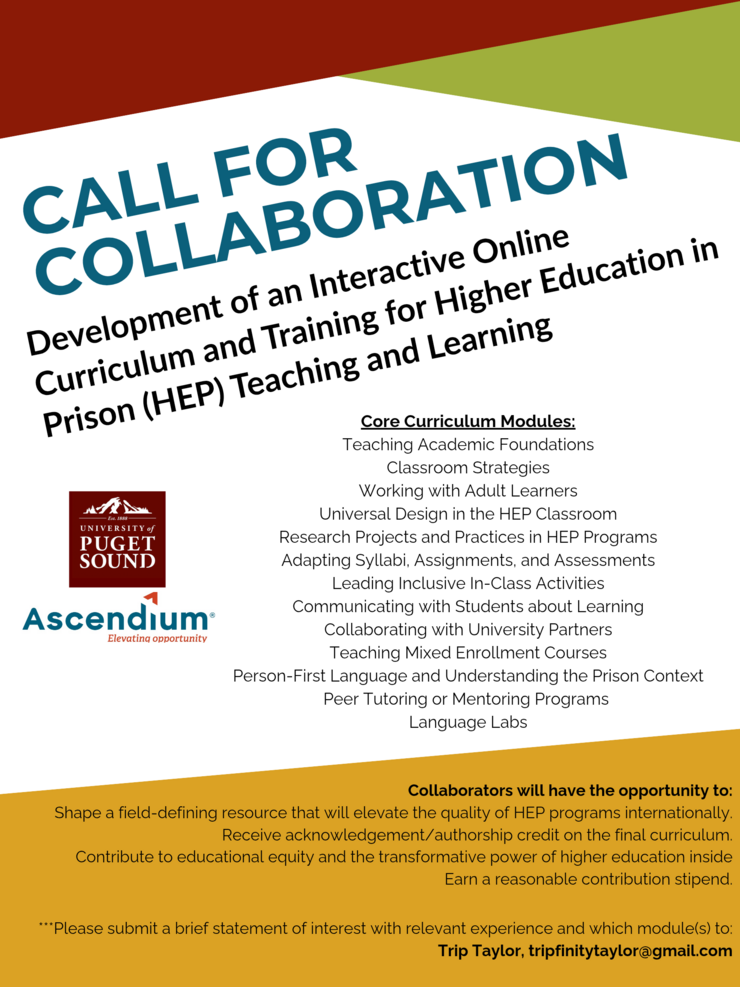
Call for Collaboration:
Development of an Interactive Online Curriculum and Training for Higher Education in Prison (HEP) Teaching and Learning
Who We Are:
Based out of the University of Puget Sound and led by Tanya Erzen, our project recently released the report "Bridging the Divide." This report shares several promising practices designed to help educators and administrators of HEP programs enhance services for their students. We had a dedicated team of 27 individuals, the majority of whom are directly impacted by the justice system, who came together to assess the current landscape of teaching and learning services within the Higher Education in Prison (HEP) field for the report.
The project is now expanding to formalize and implement some of these practices across the field. This next phase is being led by Dr. Erzen with two formerly incarcerated individuals who previously helped develop and lead prison education programs from the inside and are currently working outside in the field: Trip Taylor and Elizabeth Shatswell.
Introduction:
We are seeking passionate educators, instructional designers, scholars, and practitioners committed to excellence and equity in higher education in prison (HEP) programs to collaborate on the development of a comprehensive, interactive, living online curriculum for teaching and learning within prison settings. This crucial resource will equip current and future HEP instructors, university partners, and program staff with the specialized pedagogical knowledge, strategies, and cultural competence necessary to foster rigorous, engaging, and supportive learning environments for incarcerated students.
We are not seeking to reinvent the wheel here. We know that many amazing people on the ground throughout the field have already designed and created remarkable resources along these lines. Our goal is to bring together the resources already out there at individual facilities or programs to develop a robust, living curriculum that can be accessed and utilized by practitioners all over the world working in HEP programs.
This project aims to further bridge the gap between traditional higher education teaching methods and the unique needs, challenges, and opportunities presented by the prison classroom context and learners who have often faced systemic educational barriers.
We are inviting collaborators to join us in designing and developing the following core modules:
Core Curriculum Modules:
Teaching Academic Foundations: Strategies for explicitly teaching fundamental college-level skills, including reading and writing strategies, critical thinking, executive functioning, time management, organizational skills, and navigating the culture of higher education ("learning to be a college student").
Classroom Strategies: Culturally Responsive, Anti-Racist, Trauma-Informed: Developing classroom practices and content delivery that acknowledge and address issues of race, culture, systemic inequality, and the impact of trauma on learning and engagement.
Working with Adult Learners: Exploring principles of andragogy, motivation, prior knowledge, and life experience as assets in the HEP classroom, focusing on effective instructional strategies for adult student success.
Universal Design in the HEP Classroom: Applying Universal Design for Learning (UDL) principles to course design, materials, and instruction to maximize accessibility for all learners. This module will include a specific discussion of disability, accommodation, and access in the carceral context.
Research Projects and Practices in HEP Programs: Guidance on ethical considerations, constraints, and effective strategies for incorporating research methods, information literacy, and project-based learning into the prison classroom, including working with limited resources.
Adapting Syllabi, Assignments, and Assessments: Practical approaches to modifying standard college course materials, learning outcomes, and evaluation methods to be relevant, accessible, and fair within the constraints and realities of the prison environment. Includes low-or-no-tech modifications.
Leading Inclusive In-Class Activities: Techniques for facilitating engaging, equitable, and rigorous classroom interactions, including best practices for leading dynamic class discussions and structuring effective group work.
Communicating with Students about Learning: Strategies for providing constructive, growth-oriented feedback on student work and navigating communication barriers, privacy concerns, and administrative constraints in the HEP context.
Collaborating with University Partners: Best practices for integrating the essential support services of a university—including librarians/research librarians, writing centers, student support staff, and disability services—into HEP programs.
Teaching Mixed Enrollment Courses: Strategies for successfully managing classrooms that include both incarcerated students and non-incarcerated university students (where applicable), ensuring an inclusive and equitable experience for all.
Person-First Language and Understanding the Prison Context: Essential training on using respectful, non-stigmatizing language, understanding the operational and administrative realities of the correctional environment, and navigating security and policy requirements.
Peer Tutoring or Mentoring Programs: Useful tips or guidance on the development of peer tutoring or mentoring within HEP programs.
Language Labs: Innovative curriculum that harnesses immersive methods to transform how students master listening, speaking, reading, and writing skills while deepening their cultural understanding through authentic engagement.
Our Vision:
The final product will be a dynamic, interactive online curriculum and training utilizing multimedia resources, practical case studies, downloadable templates, and opportunities for reflective practice and peer learning. It will be designed for asynchronous access, catering to the schedules of busy educators and staff - but meant to be completed in cohorts for more interactive engagement.
We are seeking collaborators with expertise in:
Higher Education in Prison (HEP) program administration or teaching
Adaptive Instructional Design
Culturally Responsive and Anti-Racist Pedagogy
Trauma-Informed Practices in Education
Universal Design for Learning (UDL) and Disability Services
Adult Learning Theory (Andragogy)
Lived Experience
Benefits of Collaboration:
Collaborators will have the opportunity to:
Shape a field-defining resource that will elevate the quality of HEP programs internationally.
Receive acknowledgement/authorship credit on the final curriculum.
Contribute to educational equity and the transformative power of higher education for incarcerated individuals.
Earn a reasonable contribution stipend.
How to Express Interest:
To express your interest and receive a detailed outline of next steps, please submit a brief statement of interest (no more than 500 words) outlining your relevant experience and the module(s) you are most interested in contributing to tripfinitytaylor@gmail.com by Friday, December 19th, 2025.
We will schedule a Zoom call for mid to late January with those willing and able to contribute to discuss the path forward. We are excited to develop this essential resource with the community!